Countries in Oceania by protected land
The share of the land in national parks, nature reserves and other protected areas. 13 countries in Oceania, highest first. World Bank, 2025
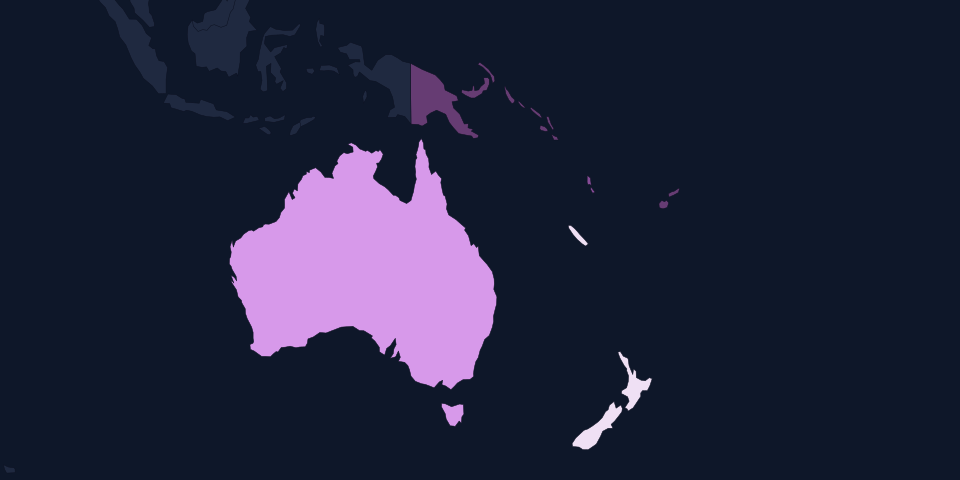
Median country
7.9%
half above, half below| # | Country | % of land | Region |
|---|---|---|---|
| 1 |  New Zealand New Zealand | 33.4% | Australia and New Zealand |
| 2 |  Palau Palau | 31.4% | Micronesia |
| 3 |  Kiribati Kiribati | 22.9% | Micronesia |
| 4 |  Australia Australia | 22.0% | Australia and New Zealand |
| 5 |  Marshall Islands Marshall Islands | 16.1% | Micronesia |
| 6 |  Tonga Tonga | 13.3% | Polynesia |
| 7 |  Samoa Samoa | 7.9% | Polynesia |
| 8 |  Vanuatu Vanuatu | 4.8% | Melanesia |
| 9 |  Fiji Fiji | 3.9% | Melanesia |
| 10 |  Papua New Guinea Papua New Guinea | 3.7% | Melanesia |
| 11 |  Solomon Islands Solomon Islands | 2.4% | Melanesia |
| =12 |  Micronesia Micronesia | 0.0% | Micronesia |
| =12 |  Nauru Nauru | 0.0% | Micronesia |
Territories and other places
Not ranked: dependencies of the states above, places whose status is disputed. Highest first.
| Place | % of land | Status |
|---|---|---|
 New Caledonia New Caledonia | 59.6% | Territory of France |
 American Samoa American Samoa | 16.4% | Territory of United States of America |
 French Polynesia French Polynesia | 5.6% | Territory of France |
 Guam Guam | 4.2% | Territory of United States of America |
 Northern Mariana Islands Northern Mariana Islands | 2.8% | Territory of United States of America |
Questions
- Which country in Oceania has the most protected land?
- New Zealand has the most protected land in Oceania: 33.4% of the land protected (2025). Next come Palau (31.4% of the land protected) and Kiribati (22.9% of the land protected).
- Which country in Oceania has the least protected land?
- Nauru, with 0.0% of the land protected (2025).
- What is the typical protected land of a country in Oceania?
- The median of the 13 countries in Oceania is 7.9% of the land protected: half are above it, half below. The median, not the average, because a few countries at the top would drag an average far above almost everyone.
- Where do the figures come from?
- The share of the land in national parks, nature reserves and other protected areas. Source: World Bank, 2025. Only independent states are ranked; territories are listed separately. A country’s continent follows Natural Earth; the handful of island states it files under the open ocean are placed by their UN subregion.
Source: World Bank (CC BY 4.0). Figures more than 5 years older than the newest are left out rather than shown beside current ones. Countries sharing a value share a rank. All sources.