Countries in Oceania by urban population
The share of people living in urban areas, as each country defines them — the World Bank does not impose one definition. 13 countries in Oceania, highest first. World Bank, 2025
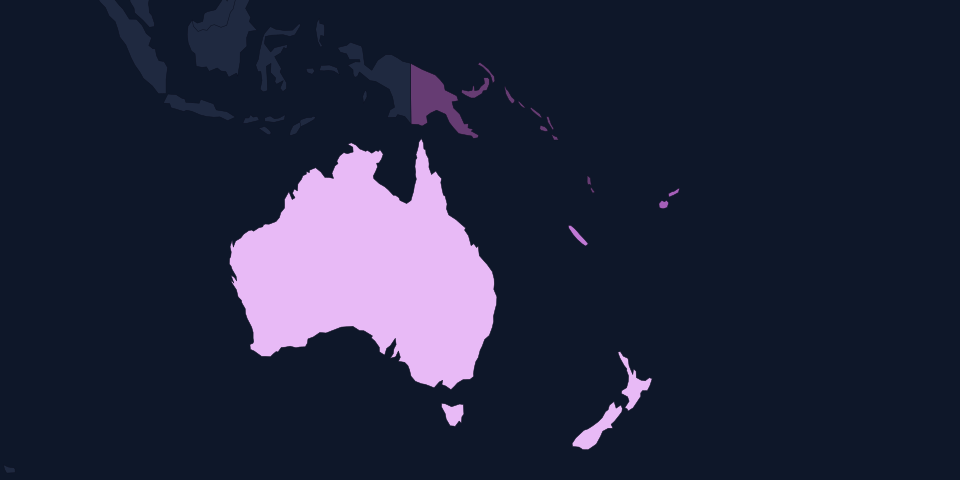
Median country
60%
half above, half below| # | Country | % urban | Region |
|---|---|---|---|
| 1 |  Nauru Nauru | 100% | Micronesia |
| 2 |  Australia Australia | 88% | Australia and New Zealand |
| 3 |  New Zealand New Zealand | 84% | Australia and New Zealand |
| 4 |  Palau Palau | 79% | Micronesia |
| 5 |  Marshall Islands Marshall Islands | 79% | Micronesia |
| 6 |  Kiribati Kiribati | 63% | Micronesia |
| 7 |  Fiji Fiji | 60% | Melanesia |
| 8 |  Solomon Islands Solomon Islands | 31% | Melanesia |
| 9 |  Micronesia Micronesia | 23% | Micronesia |
| 10 |  Vanuatu Vanuatu | 22% | Melanesia |
| 11 |  Tonga Tonga | 21% | Polynesia |
| 12 |  Samoa Samoa | 18% | Polynesia |
| 13 |  Papua New Guinea Papua New Guinea | 16% | Melanesia |
Territories and other places
Not ranked: dependencies of the states above, places whose status is disputed. Highest first.
| Place | % urban | Status |
|---|---|---|
 Guam Guam | 94% | Territory of United States of America |
 Northern Mariana Islands Northern Mariana Islands | 92% | Territory of United States of America |
 American Samoa American Samoa | 81% | Territory of United States of America |
 New Caledonia New Caledonia | 68% | Territory of France |
 French Polynesia French Polynesia | 62% | Territory of France |
Questions
- Which country in Oceania has the most urban population?
- Nauru has the most urban population in Oceania: 100% urban (2025). Next come Australia (88% urban) and New Zealand (84% urban).
- Which country in Oceania has the most rural population?
- Papua New Guinea, with 16% urban (2025).
- What is the typical urban population of a country in Oceania?
- The median of the 13 countries in Oceania is 60% urban: half are above it, half below. The median, not the average, because a few countries at the top would drag an average far above almost everyone.
- Where do the figures come from?
- The share of people living in urban areas, as each country defines them — the World Bank does not impose one definition. Source: World Bank, 2025. Only independent states are ranked; territories are listed separately. A country’s continent follows Natural Earth; the handful of island states it files under the open ocean are placed by their UN subregion.
Source: World Bank (CC BY 4.0). Figures more than 5 years older than the newest are left out rather than shown beside current ones. Countries sharing a value share a rank. All sources.