Côte d'Ivoire vs Mali
Mali is 3.85 times larger than Côte d'Ivoire. Côte d'Ivoire would fit into Mali about 3.8 times.
Côte d'IvoireMaliCôte d'Ivoire moved onto Mali · Equal-area projection
0.26×
Côte d'Ivoire is 0.26× the area of Mali. Put the other way, Mali is 3.85× the size of Côte d'Ivoire.
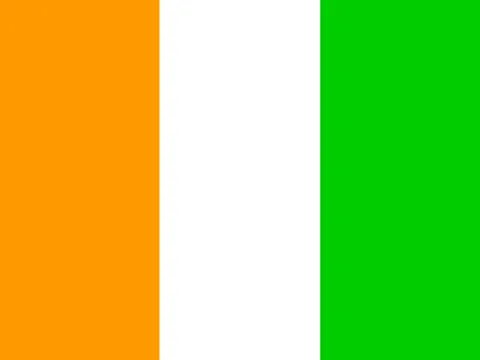 Côte d'Ivoire | 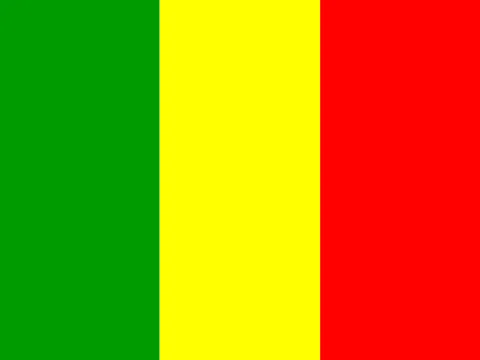 Mali | |
|---|---|---|
| Size | ||
| AreaMali: 3.85× the area | 322,463 km²#69 of 194 | 1,240,192 km²#23 of 194 |
| Coastline | Has a coast | Landlocked |
| Land neighbours | 5 | 7 |
| People | ||
| PopulationCôte d'Ivoire: 1.3× the population | 32,711,547#50 of 194 · 2025 | 25,198,821#58 of 194 · 2025 |
| DensityCôte d'Ivoire: 4.99× the density | 101 / km²#87 of 194 | 20 / km²#165 of 194 |
| Urban populationCôte d'Ivoire: 1.69× the urban share | 55%#124 of 192 · 2025 | 32%#165 of 192 · 2025 |
| Fertility rateMali: 1.3× the births per woman | 4.23 per woman#18 of 192 · 2024 | 5.51 per woman#6 of 192 · 2024 |
| Population growthMali: 0.50 points higher | +2.40%#26 of 192 · 2025 | +2.90%#14 of 192 · 2025 |
| Birth rateMali: 1.25× the birth rate | 31.6 per 1,000#23 of 192 · 2024 | 39.5 per 1,000#6 of 192 · 2024 |
| Death rateMali: 1.12× the death rate | 7.6 per 1,000#83 of 192 · 2024 | 8.5 per 1,000#63 of 192 · 2024 |
| Children under 15Mali: 5.3 points higher | 40.5%#19 of 192 · 2025 | 45.8%#6 of 192 · 2025 |
| People over 65Côte d'Ivoire: 0.3 points higher | 2.7%#176 of 192 · 2025 | 2.4%#185 of 192 · 2025 |
| Net migrationCôte d'Ivoire: 2.2 per 1,000 higher | +0.3 per 1,000#64 of 192 · 2025 | −1.9 per 1,000#142 of 192 · 2025 |
| Refugees abroadMali: 20.8× the refugees for its size | 0.99 per 1,000#61 of 190 · 2025 | 20.63 per 1,000#11 of 190 · 2025 |
| Health & education | ||
| Life expectancyCôte d'Ivoire: 1.4 years longer | 62.1 years#179 of 192 · 2024 | 60.7 years#186 of 192 · 2024 |
| Infant mortalityMali: 1.06× the infant mortality | 44.8 per 1,000 births#18 of 191 · 2024 | 47.5 per 1,000 births#16 of 191 · 2024 |
| DoctorsMali: 1.12× the doctors per person | 0.17 per 1,000#155 of 178 · 2023 | 0.19 per 1,000#151 of 178 · 2023 |
| University enrolment | 12.3%#127 of 145 · 2024 | — |
| Human Development IndexCôte d'Ivoire: 0.163 higher | 0.582#154 of 190 · 2023 | 0.419#185 of 190 · 2023 |
| Economy | ||
| GNI per capitaCôte d'Ivoire: 2.48× the income per person | $2,780#139 of 185 · 2025 | $1,120#166 of 185 · 2025 |
| GDPCôte d'Ivoire: 3.32× the economy | $99.77B2025 | $30.07B2025 |
| Income group | Lower-middle income | Low income |
| GDP per capita (PPP)Côte d'Ivoire: 2.34× the output per person | $8,209#137 of 184 · 2025 | $3,503#166 of 184 · 2025 |
| GDP growthCôte d'Ivoire: 0.9 points higher | +6.5%#23 of 187 · 2025 | +5.6%#38 of 187 · 2025 |
| InflationMali: 3.2 points higher | +0.1%#161 of 176 · 2025 | +3.3%#81 of 176 · 2025 |
| UnemploymentMali: 1.22× the unemployment | 2.3%#157 of 178 · 2025 | 2.8%#146 of 178 · 2025 |
| Extreme povertyMali: 1.74× the share in extreme poverty | 20.8%#35 of 149 · 2021 | 36.1%#25 of 149 · 2021 |
| Income inequality (Gini)Mali: 0.4 higher | 35.3#70 of 149 · 2021 | 35.7#66 of 149 · 2021 |
| Jobs in agricultureMali: 17.6 points higher | 45.4% of jobs#29 of 178 · 2025 | 63.0% of jobs#12 of 178 · 2025 |
| Jobs in industryCôte d'Ivoire: 5.7 points higher | 14.3% of jobs#141 of 178 · 2025 | 8.6% of jobs#161 of 178 · 2025 |
| Jobs in servicesCôte d'Ivoire: 11.9 points higher | 40.3% of jobs#146 of 178 · 2025 | 28.4% of jobs#167 of 178 · 2025 |
| Foreign investmentMali: 0.8 points higher | 2.0% of GDP#92 of 184 · 2025 | 2.8% of GDP#68 of 184 · 2025 |
| ExportsCôte d'Ivoire: 7.7 points higher | 29.8% of GDP#103 of 168 · 2025 | 22.1% of GDP#124 of 168 · 2025 |
| Military spendingMali: 5.03× the military spending | 0.8% of GDP#130 of 155 · 2025 | 3.9% of GDP#14 of 155 · 2025 |
| Internet usersCôte d'Ivoire: 1.13× the share online | 41%#152 of 184 · 2024 | 37%#157 of 184 · 2024 |
| Mobile subscriptionsCôte d'Ivoire: 1.64× the mobile subscriptions | 184 per 100#6 of 191 · 2024 | 112 per 100#107 of 191 · 2022 |
| Energy & environment | ||
| Forest areaCôte d'Ivoire: 1.39× the forest share | 12% of land#143 of 192 · 2024 | 9% of land#158 of 192 · 2024 |
| CO₂ per personCôte d'Ivoire: 1.97× the CO₂ per person | 0.59 t a year#143 of 185 · 2024 | 0.30 t a year#161 of 185 · 2024 |
| Renewable energyMali: 12.9 points higher | 58.2%#39 of 190 · 2021 | 71.1%#28 of 190 · 2022 |
| Access to electricityCôte d'Ivoire: 23.4 points higher | 72.9%#152 of 192 · 2024 | 49.5%#178 of 192 · 2024 |
| Air pollution (PM2.5)Mali: 1.74× the air pollution | 20.4 µg/m³#77 of 191 · 2023 | 35.5 µg/m³#33 of 191 · 2023 |
| Protected landCôte d'Ivoire: 15.4 points higher | 22.9% of land#60 of 191 · 2025 | 7.5% of land#159 of 191 · 2025 |
| Arable landCôte d'Ivoire: 10.2 points higher | 15.7% of land#71 of 190 · 2024 | 5.5% of land#126 of 190 · 2024 |
| Water stressMali: 1.57× the water stress | 5.1%#119 of 176 · 2022 | 8.0%#99 of 176 · 2022 |
| PrecipitationCôte d'Ivoire: 4.78× the rain and snow | 1,348 mm#66 of 180 · 2022 | 282 mm#155 of 180 · 2022 |
| Governance & safety | ||
| Political stabilityCôte d'Ivoire: 1.78 higher | −0.72#155 of 193 · 2025 | −2.50#192 of 193 · 2025 |
| Control of corruptionCôte d'Ivoire: 0.67 higher | −0.27#97 of 193 · 2025 | −0.94#149 of 193 · 2025 |
| State | ||
| Status | Independent state | Independent state |
| Government | Presidential republic | Semi-presidential republic |
| Capital | Yamoussoukro | Bamako |
| Currency | West African CFA franc (XOF) | West African CFA franc (XOF) |
| Official languages | French | Fula, Bambara, Soninke, Hassaniya Arabic, Songhay, Maninka, Dogon, Tamasheq, Senufo, Minyanka, Bozo, Kassonke, Bobo |
| Traffic drives | On the right | On the right |
| Time zone | UTC | UTC |
| Calling code | +225 | +223 |
| Region | Western Africa, Africa | Western Africa, Africa |
Area: Wikidata. Population, income, health, economy, environment and governance: World Bank. Human Development Index: UNDP. Government: CIA World Factbook. Ranks among the 194 independent states. All sources
Why the map you grew up with disagrees
On a Mercator map, area grows with distance from the equator. Côte d'Ivoire sits at about 8° N and is stretched to 1.02× its true area; Mali at 17° N is stretched to 1.1×. Here the two are distorted about the same amount, so Mercator gets this pair roughly right. The figure above uses the Equal Earth projection, where every square kilometre is drawn the same size.
Questions about this pair
- Is Côte d'Ivoire bigger than Mali?
- No. Côte d'Ivoire is 3.85 times smaller than Mali. Côte d'Ivoire covers 322,463 km² and Mali covers 1,240,192 km².
- How many times does Côte d'Ivoire fit into Mali?
- About 3.8 times: Mali has 3.85× the area of Côte d'Ivoire.
- Why do Côte d'Ivoire and Mali look different on Google Maps?
- Web maps use the Mercator projection, which stretches area with distance from the equator. Côte d'Ivoire is drawn about 1.02× its true area there and Mali about 1.1×. For this pair the distortion is similar, so Mercator gets the comparison roughly right. Kartavera uses Equal Earth, where every square kilometre is drawn the same size.
- Which has more people, Côte d'Ivoire or Mali?
- Côte d'Ivoire: 32,711,547 people against 25,198,821. Density: Côte d'Ivoire 101 per km², Mali 20 per km².
- Which is richer, Côte d'Ivoire or Mali?
- By gross national income per person, Côte d'Ivoire: $2,780 against $1,120 (World Bank, Atlas method, 2025) — 2.48× as much.
- Where do people live longer, Côte d'Ivoire or Mali?
- In Côte d'Ivoire: life expectancy at birth is 62.1 years, against 60.7 — 1.4 years longer (World Bank, 2024).
- What kind of government do Côte d'Ivoire and Mali have?
- By constitution, as the CIA World Factbook describes them — Côte d'Ivoire: presidential republic; Mali: semi-presidential republic.