Countries by access to electricity
The share of people who have electricity at home. 192 countries, highest first. World Bank, 2024
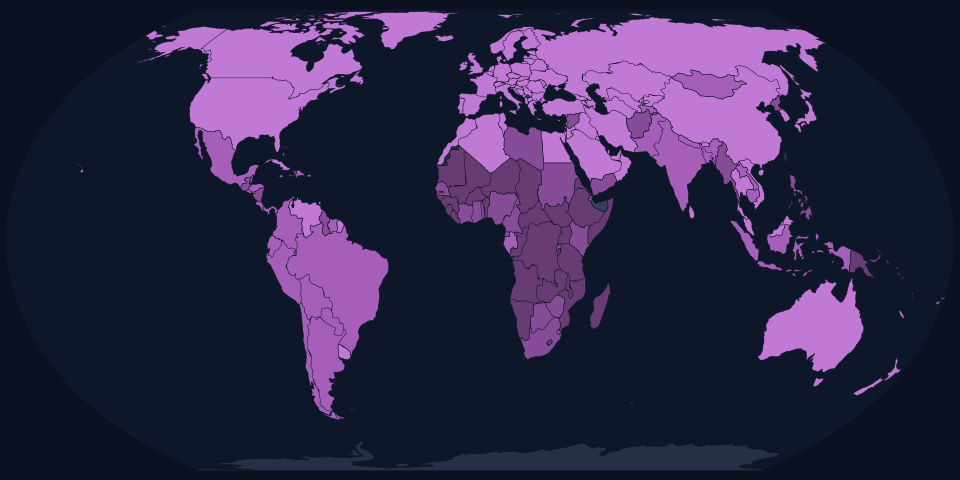
Median country
100.0%
half above, half below| # | Country | % of people | Region |
|---|---|---|---|
| =1 |  Albania Albania | 100.0% | Southern Europe |
| =1 |  Algeria Algeria | 100.0% | Northern Africa |
| =1 |  Andorra Andorra | 100.0% | Southern Europe |
| =1 |  Antigua and Barbuda Antigua and Barbuda | 100.0% | Caribbean |
| =1 |  Armenia Armenia | 100.0% | Western Asia |
| =1 |  Australia Australia | 100.0% | Australia and New Zealand |
| =1 |  Austria Austria | 100.0% | Western Europe |
| =1 |  Azerbaijan Azerbaijan | 100.0% | Western Asia |
| =1 |  Bahamas Bahamas | 100.0% | Caribbean |
| =1 |  Bahrain Bahrain | 100.0% | Western Asia |
| =1 |  Barbados Barbados | 100.0% | Caribbean |
| =1 |  Belarus Belarus | 100.0% | Eastern Europe |
| =1 |  Belgium Belgium | 100.0% | Western Europe |
| =1 |  Bhutan Bhutan | 100.0% | Southern Asia |
| =1 |  Bosnia and Herzegovina Bosnia and Herzegovina | 100.0% | Southern Europe |
| =1 |  Brunei Brunei | 100.0% | South-Eastern Asia |
| =1 |  Bulgaria Bulgaria | 100.0% | Eastern Europe |
| =1 |  Canada Canada | 100.0% | Northern America |
| =1 |  China China | 100.0% | Eastern Asia |
| =1 |  Croatia Croatia | 100.0% | Southern Europe |
| =1 |  Cuba Cuba | 100.0% | Caribbean |
| =1 |  Cyprus Cyprus | 100.0% | Western Asia |
| =1 |  Czechia Czechia | 100.0% | Eastern Europe |
| =1 |  Denmark Denmark | 100.0% | Northern Europe |
| =1 |  Dominica Dominica | 100.0% | Caribbean |
| =1 |  Egypt Egypt | 100.0% | Northern Africa |
| =1 |  Estonia Estonia | 100.0% | Northern Europe |
| =1 |  Finland Finland | 100.0% | Northern Europe |
| =1 |  France France | 100.0% | Western Europe |
| =1 |  Georgia Georgia | 100.0% | Western Asia |
| =1 |  Germany Germany | 100.0% | Western Europe |
| =1 |  Greece Greece | 100.0% | Southern Europe |
| =1 |  Hungary Hungary | 100.0% | Eastern Europe |
| =1 |  Iceland Iceland | 100.0% | Northern Europe |
| =1 |  Iran Iran | 100.0% | Southern Asia |
| =1 |  Iraq Iraq | 100.0% | Western Asia |
| =1 |  Ireland Ireland | 100.0% | Northern Europe |
| =1 |  Israel Israel | 100.0% | Western Asia |
| =1 |  Italy Italy | 100.0% | Southern Europe |
| =1 |  Japan Japan | 100.0% | Eastern Asia |
| =1 |  Jordan Jordan | 100.0% | Western Asia |
| =1 |  Kazakhstan Kazakhstan | 100.0% | Central Asia |
| =1 |  Kuwait Kuwait | 100.0% | Western Asia |
| =1 |  Kyrgyzstan Kyrgyzstan | 100.0% | Central Asia |
| =1 |  Latvia Latvia | 100.0% | Northern Europe |
| =1 |  Lebanon Lebanon | 100.0% | Western Asia |
| =1 |  Liechtenstein Liechtenstein | 100.0% | Western Europe |
| =1 |  Lithuania Lithuania | 100.0% | Northern Europe |
| =1 |  Luxembourg Luxembourg | 100.0% | Western Europe |
| =1 |  Malaysia Malaysia | 100.0% | South-Eastern Asia |
| =1 |  Maldives Maldives | 100.0% | Southern Asia |
| =1 |  Malta Malta | 100.0% | Southern Europe |
| =1 |  Mauritius Mauritius | 100.0% | Eastern Africa |
| =1 |  Moldova Moldova | 100.0% | Eastern Europe |
| =1 |  Monaco Monaco | 100.0% | Western Europe |
| =1 |  Montenegro Montenegro | 100.0% | Southern Europe |
| =1 |  Morocco Morocco | 100.0% | Northern Africa |
| =1 |  Nauru Nauru | 100.0% | Micronesia |
| =1 |  Netherlands Netherlands | 100.0% | Western Europe |
| =1 |  New Zealand New Zealand | 100.0% | Australia and New Zealand |
| =1 |  North Macedonia North Macedonia | 100.0% | Southern Europe |
| =1 |  Norway Norway | 100.0% | Northern Europe |
| =1 |  Oman Oman | 100.0% | Western Asia |
| =1 |  Palau Palau | 100.0% | Micronesia |
| =1 |  Poland Poland | 100.0% | Eastern Europe |
| =1 |  Portugal Portugal | 100.0% | Southern Europe |
| =1 |  Qatar Qatar | 100.0% | Western Asia |
| =1 |  Romania Romania | 100.0% | Eastern Europe |
| =1 |  Russia Russia | 100.0% | Eastern Europe |
| =1 |  Saint Kitts and Nevis Saint Kitts and Nevis | 100.0% | Caribbean |
| =1 |  Saint Lucia Saint Lucia | 100.0% | Caribbean |
| =1 |  Saint Vincent and the Grenadines Saint Vincent and the Grenadines | 100.0% | Caribbean |
| =1 |  Samoa Samoa | 100.0% | Polynesia |
| =1 |  San Marino San Marino | 100.0% | Southern Europe |
| =1 |  Saudi Arabia Saudi Arabia | 100.0% | Western Asia |
| =1 |  Serbia Serbia | 100.0% | Southern Europe |
| =1 |  Seychelles Seychelles | 100.0% | Eastern Africa |
| =1 |  Singapore Singapore | 100.0% | South-Eastern Asia |
| =1 |  Slovakia Slovakia | 100.0% | Eastern Europe |
| =1 |  Slovenia Slovenia | 100.0% | Southern Europe |
| =1 |  South Korea South Korea | 100.0% | Eastern Asia |
| =1 |  Spain Spain | 100.0% | Southern Europe |
| =1 |  Sri Lanka Sri Lanka | 100.0% | Southern Asia |
| =1 |  Sweden Sweden | 100.0% | Northern Europe |
| =1 |  Switzerland Switzerland | 100.0% | Western Europe |
| =1 |  Thailand Thailand | 100.0% | South-Eastern Asia |
| =1 |  Tonga Tonga | 100.0% | Polynesia |
| =1 |  Trinidad and Tobago Trinidad and Tobago | 100.0% | Caribbean |
| =1 |  Tunisia Tunisia | 100.0% | Northern Africa |
| =1 |  Turkey Turkey | 100.0% | Western Asia |
| =1 |  Turkmenistan Turkmenistan | 100.0% | Central Asia |
| =1 |  Ukraine Ukraine | 100.0% | Eastern Europe |
| =1 |  United Arab Emirates United Arab Emirates | 100.0% | Western Asia |
| =1 |  United Kingdom United Kingdom | 100.0% | Northern Europe |
| =1 |  United States United States | 100.0% | Northern America |
| =1 |  Uruguay Uruguay | 100.0% | South America |
| =1 |  Uzbekistan Uzbekistan | 100.0% | Central Asia |
| =1 |  Venezuela Venezuela | 100.0% | South America |
| =1 |  Vietnam Vietnam | 100.0% | South-Eastern Asia |
| =100 |  India India | 99.9% | Southern Asia |
| =100 |  Indonesia Indonesia | 99.9% | South-Eastern Asia |
| =100 |  Tajikistan Tajikistan | 99.9% | Central Asia |
| =103 |  Brazil Brazil | 99.8% | South America |
| =103 |  Costa Rica Costa Rica | 99.8% | Central America |
| =103 |  Mexico Mexico | 99.8% | Central America |
| =103 |  Paraguay Paraguay | 99.8% | South America |
| 107 |  Belize Belize | 99.6% | Central America |
| =108 |  Bangladesh Bangladesh | 99.5% | Southern Asia |
| =108 |  Dominican Republic Dominican Republic | 99.5% | Caribbean |
| 110 |  Cambodia Cambodia | 99.2% | South-Eastern Asia |
| 111 |  Mongolia Mongolia | 99.1% | Eastern Asia |
| =112 |  Chile Chile | 99.0% | South America |
| =112 |  Suriname Suriname | 99.0% | South America |
| 114 |  Colombia Colombia | 98.9% | South America |
| 115 |  El Salvador El Salvador | 98.7% | Central America |
| 116 |  Ecuador Ecuador | 98.5% | South America |
| =117 |  Argentina Argentina | 98.4% | South America |
| =117 |  Cabo Verde Cabo Verde | 98.4% | Western Africa |
| 119 |  Nepal Nepal | 97.9% | Southern Asia |
| =120 |  Jamaica Jamaica | 97.7% | Caribbean |
| =120 |  Kiribati Kiribati | 97.7% | Micronesia |
| 122 |  Marshall Islands Marshall Islands | 97.2% | Micronesia |
| 123 |  Bolivia Bolivia | 96.6% | South America |
| =124 |  Laos Laos | 96.5% | South-Eastern Asia |
| =124 |  Peru Peru | 96.5% | South America |
| 126 |  Panama Panama | 96.0% | Central America |
| 127 |  Fiji Fiji | 95.9% | Melanesia |
| 128 |  Pakistan Pakistan | 95.7% | Southern Asia |
| 129 |  Grenada Grenada | 95.6% | Caribbean |
| 130 |  Honduras Honduras | 95.5% | Central America |
| 131 |  Gabon Gabon | 95.1% | Middle Africa |
| 132 |  Philippines Philippines | 94.8% | South-Eastern Asia |
| 133 |  Timor-Leste Timor-Leste | 94.3% | South-Eastern Asia |
| 134 |  Guyana Guyana | 93.0% | South America |
| 135 |  Ghana Ghana | 91.9% | Western Africa |
| 136 |  Comoros Comoros | 91.7% | Eastern Africa |
| 137 |  Guatemala Guatemala | 90.9% | Central America |
| 138 |  South Africa South Africa | 90.2% | Southern Africa |
| =139 |  Eswatini Eswatini | 89.3% | Southern Africa |
| =139 |  Syria Syria | 89.3% | Western Asia |
| 141 |  Micronesia Micronesia | 88.9% | Micronesia |
| 142 |  Nicaragua Nicaragua | 88.7% | Central America |
| 143 |  Afghanistan Afghanistan | 87.8% | Southern Asia |
| 144 |  Yemen Yemen | 86.3% | Western Asia |
| 145 |  Senegal Senegal | 82.9% | Western Africa |
| 146 |  Solomon Islands Solomon Islands | 81.5% | Melanesia |
| 147 |  Myanmar Myanmar | 80.4% | South-Eastern Asia |
| 148 |  Botswana Botswana | 80.2% | Southern Africa |
| 149 |  São Tomé and Principe São Tomé and Principe | 77.7% | Middle Africa |
| 150 |  Libya Libya | 77.4% | Northern Africa |
| 151 |  Kenya Kenya | 77.0% | Eastern Africa |
| 152 |  Côte d'Ivoire Côte d'Ivoire | 72.9% | Western Africa |
| =153 |  Cameroon Cameroon | 72.0% | Middle Africa |
| =153 |  Rwanda Rwanda | 72.0% | Eastern Africa |
| 155 |  Djibouti Djibouti | 69.2% | Eastern Africa |
| 156 |  Gambia Gambia | 69.0% | Western Africa |
| 157 |  Sudan Sudan | 66.0% | Northern Africa |
| 158 |  Vanuatu Vanuatu | 65.5% | Melanesia |
| 159 |  Equatorial Guinea Equatorial Guinea | 65.1% | Middle Africa |
| 160 |  Nigeria Nigeria | 62.5% | Western Africa |
| 161 |  Zimbabwe Zimbabwe | 62.0% | Eastern Africa |
| 162 |  North Korea North Korea | 61.4% | Eastern Asia |
| 163 |  Togo Togo | 61.1% | Western Africa |
| 164 |  Lesotho Lesotho | 60.6% | Southern Africa |
| 165 |  Namibia Namibia | 59.3% | Southern Africa |
| 166 |  Benin Benin | 59.0% | Western Africa |
| 167 |  Ethiopia Ethiopia | 56.6% | Eastern Africa |
| 168 |  Angola Angola | 55.5% | Middle Africa |
| =169 |  Eritrea Eritrea | 55.3% | Eastern Africa |
| =169 |  Uganda Uganda | 55.3% | Eastern Africa |
| 171 |  Somalia Somalia | 54.4% | Eastern Africa |
| 172 |  Haiti Haiti | 53.9% | Caribbean |
| 173 |  Guinea Guinea | 53.8% | Western Africa |
| 174 |  Zambia Zambia | 53.6% | Eastern Africa |
| 175 |  Congo Congo | 53.0% | Middle Africa |
| 176 |  Tanzania Tanzania | 52.4% | Eastern Africa |
| 177 |  Mauritania Mauritania | 52.2% | Western Africa |
| 178 |  Mali Mali | 49.5% | Western Africa |
| 179 |  Guinea-Bissau Guinea-Bissau | 43.7% | Western Africa |
| 180 |  Papua New Guinea Papua New Guinea | 43.3% | Melanesia |
| 181 |  Madagascar Madagascar | 42.5% | Eastern Africa |
| 182 |  Sierra Leone Sierra Leone | 39.2% | Western Africa |
| 183 |  Mozambique Mozambique | 36.9% | Eastern Africa |
| 184 |  Liberia Liberia | 34.9% | Western Africa |
| 185 |  Burkina Faso Burkina Faso | 34.0% | Western Africa |
| 186 |  DR Congo DR Congo | 22.5% | Middle Africa |
| 187 |  Niger Niger | 21.3% | Western Africa |
| 188 |  Burundi Burundi | 20.1% | Eastern Africa |
| 189 |  Central African Republic Central African Republic | 18.2% | Middle Africa |
| 190 |  Malawi Malawi | 15.6% | Eastern Africa |
| 191 |  Chad Chad | 13.4% | Middle Africa |
| 192 |  South Sudan South Sudan | 5.4% | Eastern Africa |
No World Bank figure for 2 countries: Taiwan, Vatican City.
Territories and other places
Not ranked: dependencies of the states above, places whose status is disputed, and Antarctica. Highest first.
| Place | % of people | Status |
|---|---|---|
 Aruba Aruba | 100.0% | Territory of Netherlands |
 Bermuda Bermuda | 100.0% | Territory of United Kingdom |
 British Virgin Islands British Virgin Islands | 100.0% | Territory of United Kingdom |
 Cayman Islands Cayman Islands | 100.0% | Territory of United Kingdom |
 Curaçao Curaçao | 100.0% | Territory of Netherlands |
 Faroe Islands Faroe Islands | 100.0% | Territory of Denmark |
 French Polynesia French Polynesia | 100.0% | Territory of France |
 Greenland Greenland | 100.0% | Territory of Denmark |
 Guam Guam | 100.0% | Territory of United States of America |
 Hong Kong Hong Kong | 100.0% | Territory of China |
 Isle of Man Isle of Man | 100.0% | Territory of United Kingdom |
 Macao Macao | 100.0% | Territory of China |
 New Caledonia New Caledonia | 100.0% | Territory of France |
 Northern Mariana Islands Northern Mariana Islands | 100.0% | Territory of United States of America |
 Palestine Palestine | 100.0% | Status disputed |
 Puerto Rico Puerto Rico | 100.0% | Territory of United States of America |
 Saint Martin Saint Martin | 100.0% | Territory of France |
 Sint Maarten Sint Maarten | 100.0% | Territory of Netherlands |
 Turks and Caicos Islands Turks and Caicos Islands | 100.0% | Territory of United Kingdom |
 US Virgin Islands US Virgin Islands | 100.0% | Territory of United States of America |
Questions
- Which country has the widest access to electricity?
- Albania has the widest access to electricity: 100.0% with electricity (2024). Next come Algeria (100.0% with electricity) and Andorra (100.0% with electricity).
- Which country has the least access to electricity?
- The South Sudan, with 5.4% with electricity (2024).
- What is the typical access to electricity of a country?
- The median of the 192 countries is 100.0% with electricity: half are above it, half below. The median, not the average, because a few countries at the top would drag an average far above almost everyone.
- Where do the figures come from?
- The share of people who have electricity at home. Source: World Bank, 2024. Only independent states are ranked; territories are listed separately.
Source: World Bank (CC BY 4.0). Figures more than 5 years older than the newest are left out rather than shown beside current ones. Countries sharing a value share a rank. All sources.