Åland Islands vs São Tomé and Principe
Åland Islands is 58% larger than São Tomé and Principe. São Tomé and Principe would fit into Åland Islands about 1.6 times.
Åland IslandsSão Tomé and PrincipeÅland Islands moved onto São Tomé and Principe · Equal-area projection
1.58×
Åland Islands is 1.58× the area of São Tomé and Principe.
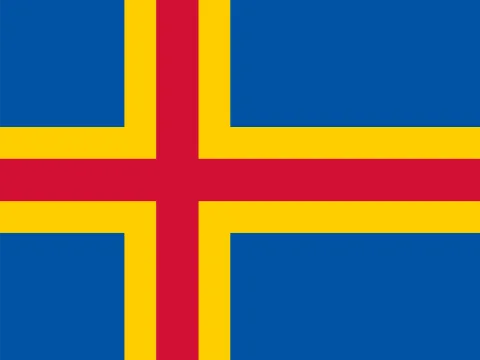 Åland Islands Åland Islands | 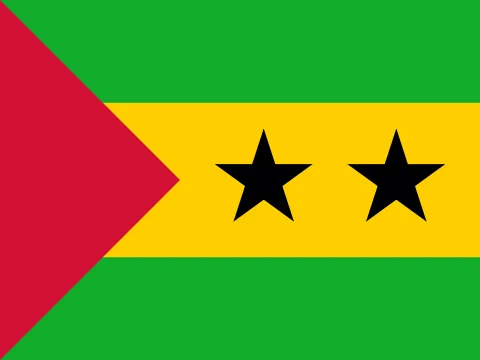 São Tomé and Principe São Tomé and Principe | |
|---|---|---|
| Size | ||
| AreaÅland Islands: 1.58× the area | 1,583 km² | 1,001 km²#171 of 194 |
| Coastline | Coast, no land border | Coast, no land border |
| Land neighbours | 0 | 0 |
| People | ||
| PopulationSão Tomé and Principe: 7.79× the population | 30,8362025 | 240,254#175 of 194 · 2025 |
| DensitySão Tomé and Principe: 12.3× the density | 19 / km² | 240 / km²#42 of 194 |
| Urban population | — | 69%#78 of 192 · 2025 |
| Fertility rate | — | 3.60 per woman#39 of 192 · 2024 |
| Population growth | — | +1.98%#49 of 192 · 2025 |
| Birth rate | — | 28.1 per 1,000#38 of 192 · 2024 |
| Death rate | — | 5.5 per 1,000#156 of 192 · 2024 |
| Children under 15 | — | 37.5%#38 of 192 · 2025 |
| People over 65 | — | 3.9%#144 of 192 · 2025 |
| Net migration | — | −2.7 per 1,000#156 of 192 · 2025 |
| Refugees abroad | — | 0.03 per 1,000#138 of 190 · 2025 |
| Health & education | ||
| Life expectancy | — | 69.9 years#131 of 192 · 2024 |
| Infant mortality | — | 9.2 per 1,000 births#114 of 191 · 2024 |
| Doctors | — | 0.46 per 1,000#130 of 178 · 2022 |
| Human Development Index | — | 0.637#138 of 190 · 2023 |
| Economy | ||
| GNI per capita | — | $3,800#128 of 185 · 2025 |
| GDP | — | $981M2025 |
| Income group | — | Lower-middle income |
| GDP per capita (PPP) | — | $6,388#144 of 184 · 2025 |
| GDP growth | — | +1.0%#156 of 187 · 2025 |
| Inflation | — | +11.0%#21 of 176 · 2025 |
| Unemployment | — | 9.1%#40 of 178 · 2025 |
| Extreme poverty | — | 13.0%#42 of 149 · 2017 |
| Income inequality (Gini) | — | 40.7#33 of 149 · 2017 |
| Jobs in agriculture | — | 12.1% of jobs#102 of 178 · 2025 |
| Jobs in industry | — | 22.5% of jobs#59 of 178 · 2025 |
| Jobs in services | — | 65.4% of jobs#68 of 178 · 2025 |
| Foreign investment | — | 10.5% of GDP#15 of 184 · 2025 |
| Exports | — | 13.3% of GDP#153 of 168 · 2025 |
| Internet users | — | 59%#136 of 184 · 2024 |
| Mobile subscriptions | — | 62 per 100#171 of 191 · 2024 |
| Energy & environment | ||
| Forest area | — | 58% of land#33 of 192 · 2024 |
| CO₂ per person | — | 0.63 t a year#142 of 185 · 2024 |
| Renewable energy | — | 42.5%#56 of 190 · 2022 |
| Access to electricity | — | 77.7%#149 of 192 · 2024 |
| Air pollution (PM2.5) | — | 15.1 µg/m³#115 of 191 · 2023 |
| Protected land | — | 31.7% of land#27 of 191 · 2025 |
| Arable land | — | 4.2% of land#135 of 190 · 2024 |
| Water stress | — | 1.9%#149 of 176 · 2022 |
| Precipitation | — | 3,200 mm#2 of 180 · 2022 |
| Governance & safety | ||
| Political stability | — | +0.55#65 of 193 · 2025 |
| Control of corruption | — | +0.13#75 of 193 · 2025 |
| State | ||
| Status | Territory of Finland | Independent state |
| Government | Dependent territory | Semi-presidential republic |
| Capital | Mariehamn | Sao Tome |
| Currency | Euro (EUR) | São Tomé and Príncipe dobra (STN) |
| Official languages | Swedish | Portuguese |
| Traffic drives | On the right | On the right |
| Time zone | UTC+2, summer time UTC+3 | UTC |
| Calling code | +358 18 | +239 |
| Region | Northern Europe, Europe | Middle Africa, Africa |
Area: Wikidata. Population, income, health, economy, environment and governance: World Bank. Human Development Index: UNDP. Government: CIA World Factbook. Ranks among the 194 independent states. All sources
Why the map you grew up with disagrees
On a Mercator map, area grows with distance from the equator. Åland Islands sits at about 60° N and is stretched to 4.05× its true area; São Tomé and Principe at 0° N is stretched to 1.0×. That difference is why Åland Islands looks so much bigger than it is next to São Tomé and Principe. The figure above uses the Equal Earth projection, where every square kilometre is drawn the same size.
Questions about this pair
- Is Åland Islands bigger than São Tomé and Principe?
- Yes. Åland Islands is 58% larger than São Tomé and Principe. Åland Islands covers 1,583 km² and São Tomé and Principe covers 1,001 km².
- How many times does São Tomé and Principe fit into Åland Islands?
- About 1.6 times: Åland Islands has 1.58× the area of São Tomé and Principe.
- Why do Åland Islands and São Tomé and Principe look different on Google Maps?
- Web maps use the Mercator projection, which stretches area with distance from the equator. Åland Islands is drawn about 4.05× its true area there and São Tomé and Principe about 1.0×. That is why Åland Islands looks so much bigger than it really is next to São Tomé and Principe. Kartavera uses Equal Earth, where every square kilometre is drawn the same size.
- Which has more people, Åland Islands or São Tomé and Principe?
- São Tomé and Principe: 240,254 people against 30,836. Density: Åland Islands 19 per km², São Tomé and Principe 240 per km².
- What kind of government do Åland Islands and São Tomé and Principe have?
- By constitution, as the CIA World Factbook describes them — Åland Islands: dependent territory; São Tomé and Principe: semi-presidential republic.