Burkina Faso vs Western Sahara
Burkina Faso is 3% larger than Western Sahara.
Burkina FasoWestern SaharaBurkina Faso moved onto Western Sahara · Equal-area projection
1.03×
Burkina Faso is 1.03× the area of Western Sahara.
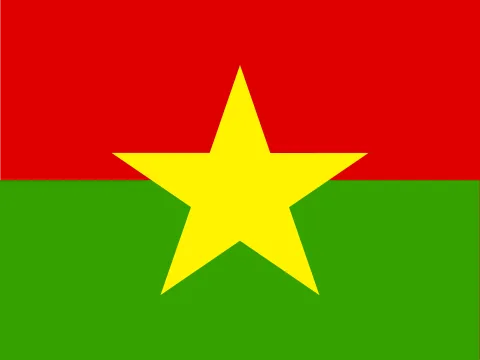 Burkina Faso | 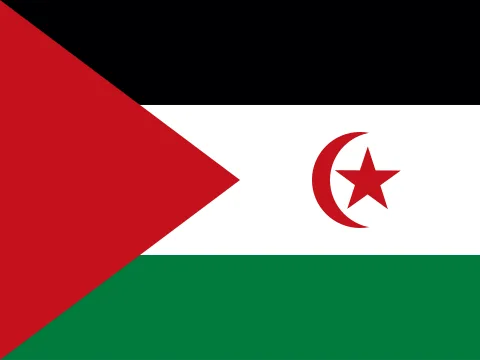 Western Sahara | |
|---|---|---|
| Size | ||
| AreaBurkina Faso: 1.03× the area | 274,200 km²#73 of 194 | 266,000 km² |
| Coastline | Landlocked | Has a coast |
| Land neighbours | 6 | 3 |
| People | ||
| PopulationBurkina Faso: 39.3× the population | 24,074,580#59 of 194 · 2025 | 612,0002021 |
| DensityBurkina Faso: 38.2× the density | 88 / km²#97 of 194 | 2.3 / km² |
| Urban population | 29%#173 of 192 · 2025 | — |
| Fertility rate | 4.11 per woman#23 of 192 · 2024 | — |
| Population growth | +2.21%#37 of 192 · 2025 | — |
| Birth rate | 31.3 per 1,000#25 of 192 · 2024 | — |
| Death rate | 7.9 per 1,000#72 of 192 · 2024 | — |
| Children under 15 | 41.2%#15 of 192 · 2025 | — |
| People over 65 | 2.7%#176 of 192 · 2025 | — |
| Net migration | −1.1 per 1,000#119 of 192 · 2025 | — |
| Refugees abroad | 14.59 per 1,000#15 of 190 · 2025 | — |
| Health & education | ||
| Life expectancy | 61.3 years#183 of 192 · 2024 | — |
| Infant mortality | 43.6 per 1,000 births#20 of 191 · 2024 | — |
| Doctors | 0.15 per 1,000#159 of 178 · 2022 | — |
| University enrolment | 10.0%#133 of 145 · 2024 | — |
| Human Development Index | 0.459#183 of 190 · 2023 | — |
| Economy | ||
| GNI per capita | $980#170 of 185 · 2025 | — |
| GDP | $27.63B2025 | — |
| Income group | Low income | — |
| GDP per capita (PPP) | $3,072#171 of 184 · 2025 | — |
| GDP growth | +5.3%#41 of 187 · 2025 | — |
| Inflation | −0.6%#171 of 176 · 2025 | — |
| Unemployment | 3.5%#121 of 178 · 2025 | — |
| Extreme poverty | 42.1%#15 of 149 · 2021 | — |
| Income inequality (Gini) | 37.4#56 of 149 · 2021 | — |
| Jobs in agriculture | 51.8% of jobs#22 of 178 · 2025 | — |
| Jobs in industry | 16.7% of jobs#121 of 178 · 2025 | — |
| Jobs in services | 31.6% of jobs#164 of 178 · 2025 | — |
| Foreign investment | 1.1% of GDP#125 of 184 · 2025 | — |
| Exports | 35.0% of GDP#85 of 168 · 2025 | — |
| Military spending | 3.3% of GDP#21 of 155 · 2025 | — |
| Internet users | 28%#168 of 184 · 2024 | — |
| Mobile subscriptions | 117 per 100#91 of 191 · 2024 | — |
| Energy & environment | ||
| Forest area | 12% of land#142 of 192 · 2024 | — |
| CO₂ per person | 0.27 t a year#165 of 185 · 2024 | — |
| Renewable energy | 71.4%#26 of 190 · 2022 | — |
| Access to electricity | 34.0%#185 of 192 · 2024 | — |
| Air pollution (PM2.5) | 37.3 µg/m³#28 of 191 · 2023 | — |
| Protected land | 16.8% of land#102 of 191 · 2025 | — |
| Arable land | 28.9% of land#32 of 190 · 2024 | — |
| Water stress | 7.8%#102 of 176 · 2022 | — |
| Precipitation | 748 mm#110 of 180 · 2022 | — |
| Governance & safety | ||
| Political stability | −1.80#181 of 193 · 2025 | — |
| Control of corruption | −0.22#94 of 193 · 2025 | — |
| Homicide rate | 1.3 per 100,000#92 of 146 · 2017 | — |
| State | ||
| Status | Independent state | Status disputed |
| Government | Presidential republic | —legal status of territory and issue of sovereignty unresolved; territory contested by Morocco and Polisario Front (Popular Front for the Liberation of the Saguia el Hamra and Rio de Oro), which in February 1976 formally proclaimed a government-in-exile of the Sahrawi Arab Democratic Republic (SADR), near Tindouf, Algeria, led by President Mohamed ABDELAZIZ until his death in May 2016; current President Brahim GHALI elected in July 2016; territory partitioned between Morocco and Mauritania in April 1976 when Spain withdrew, with Morocco acquiring northern two-thirds; Mauritania, under pressure from Polisario guerrillas, abandoned all claims to its portion in August 1979; Morocco moved to occupy that sector shortly thereafter and has since asserted administrative control; the Polisario's government-in-exile was seated as an Organization of African Unity (OAU) member in 1984; Morocco between 1980 and 1987 built a fortified sand berm delineating the roughly 75% of Western Sahara west of the barrier that currently is controlled by Morocco; guerrilla activities continued sporadically until a UN-monitored cease-fire was implemented on 6 September 1991 (Security Council Resolution 690) by the United Nations Mission for the Referendum in Western Sahara (MINURSO) |
| Capital | Ouagadougou | — |
| Currency | West African CFA franc (XOF) | Moroccan dirham (MAD) |
| Official languages | French, Mooré, Dioula, Bissa | Arabic |
| Traffic drives | On the right | On the right |
| Time zone | UTC | UTC+1 |
| Calling code | +226 | +212 |
| Region | Western Africa, Africa | Northern Africa, Africa |
Area: Wikidata. Population, income, health, economy, environment and governance: World Bank. Human Development Index: UNDP. Government: CIA World Factbook. Ranks among the 194 independent states. All sources
Why the map you grew up with disagrees
On a Mercator map, area grows with distance from the equator. Burkina Faso sits at about 12° N and is stretched to 1.05× its true area; Western Sahara at 24° N is stretched to 1.2×. Here the two are distorted about the same amount, so Mercator gets this pair roughly right. The figure above uses the Equal Earth projection, where every square kilometre is drawn the same size.
Questions about this pair
- Is Burkina Faso bigger than Western Sahara?
- Yes. Burkina Faso is 3% larger than Western Sahara. Burkina Faso covers 274,200 km² and Western Sahara covers 266,000 km².
- How many times does Western Sahara fit into Burkina Faso?
- About 1.0 times: Burkina Faso has 1.03× the area of Western Sahara.
- Why do Burkina Faso and Western Sahara look different on Google Maps?
- Web maps use the Mercator projection, which stretches area with distance from the equator. Burkina Faso is drawn about 1.05× its true area there and Western Sahara about 1.2×. For this pair the distortion is similar, so Mercator gets the comparison roughly right. Kartavera uses Equal Earth, where every square kilometre is drawn the same size.
- Which has more people, Burkina Faso or Western Sahara?
- Burkina Faso: 24,074,580 people against 612,000. Density: Burkina Faso 88 per km², Western Sahara 2.3 per km².