Countries in South America by population
Mid-year population estimate: everyone living there, whatever their citizenship. 12 countries in South America, highest first. World Bank, 2025
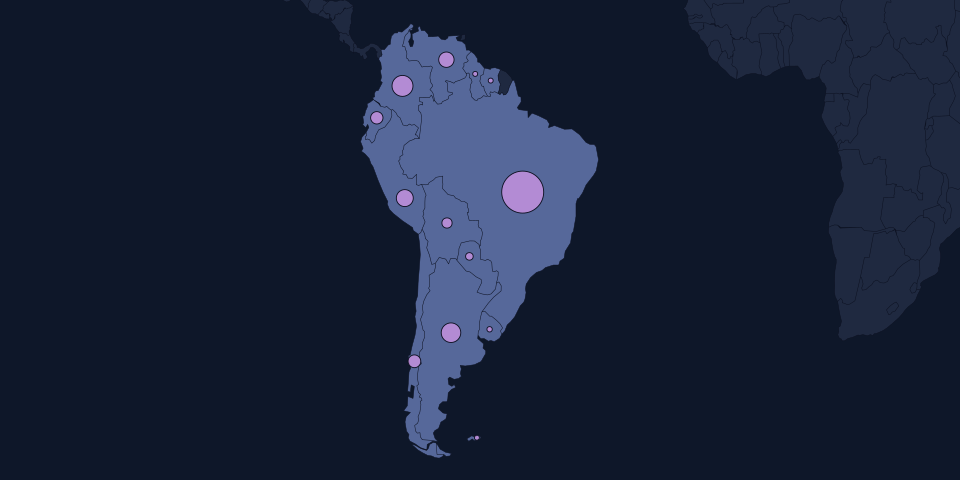
Median country
19,074,909
half above, half below| # | Country | People | Region |
|---|---|---|---|
| 1 |  Brazil Brazil | 212,812,405 | South America |
| 2 |  Colombia Colombia | 53,425,635 | South America |
| 3 |  Argentina Argentina | 45,851,378 | South America |
| 4 |  Peru Peru | 34,576,665 | South America |
| 5 |  Venezuela Venezuela | 28,516,896 | South America |
| 6 |  Chile Chile | 19,859,921 | South America |
| 7 |  Ecuador Ecuador | 18,289,896 | South America |
| 8 |  Bolivia Bolivia | 12,581,843 | South America |
| 9 |  Paraguay Paraguay | 7,013,078 | South America |
| 10 |  Uruguay Uruguay | 3,384,688 | South America |
| 11 |  Guyana Guyana | 835,986 | South America |
| 12 |  Suriname Suriname | 639,850 | South America |
Territories and other places
Not ranked: dependencies of the states above, places whose status is disputed. Highest first.
| Place | People | Status |
|---|---|---|
 Falkland Islands Falkland Islands | 4,550 | Territory of United Kingdom |
Questions
- Which country in South America has the largest population?
- Brazil has the largest population in South America: 213 million people (2025). Next come Colombia (53 million people) and Argentina (46 million people).
- Which country in South America has the smallest population?
- Suriname, with 639,850 people (2025).
- What is the typical population of a country in South America?
- The median of the 12 countries in South America is 19 million people: half are above it, half below. The median, not the average, because a few countries at the top would drag an average far above almost everyone.
- Where do the figures come from?
- Mid-year population estimate: everyone living there, whatever their citizenship. Source: World Bank, 2025. Only independent states are ranked; territories are listed separately. A country’s continent follows Natural Earth; the handful of island states it files under the open ocean are placed by their UN subregion.
Source: World Bank. Where the World Bank has no estimate, the population is Wikidata’s. Countries sharing a value share a rank. All sources.