Countries in South America by arable land
The share of the land that is ploughed and sown with crops that are replanted, or left fallow for a while. 12 countries in South America, highest first. World Bank, 2023
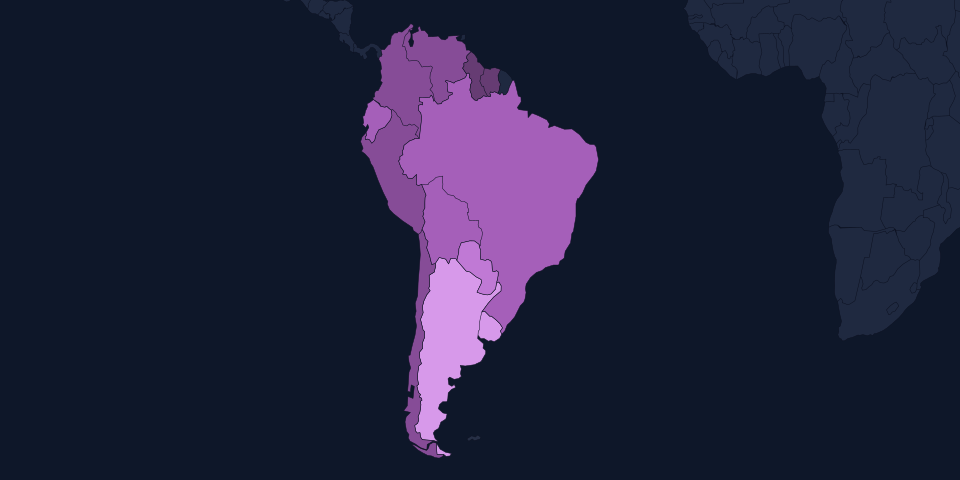
Median country
3.6%
half above, half below| # | Country | % of land | Region |
|---|---|---|---|
| 1 |  Argentina Argentina | 14.8% | South America |
| 2 |  Uruguay Uruguay | 12.6% | South America |
| 3 |  Paraguay Paraguay | 11.5% | South America |
| 4 |  Brazil Brazil | 6.7% | South America |
| 5 |  Bolivia Bolivia | 5.1% | South America |
| 6 |  Ecuador Ecuador | 4.1% | South America |
| 7 |  Peru Peru | 3.1% | South America |
| 8 |  Venezuela Venezuela | 2.9% | South America |
| 9 |  Colombia Colombia | 2.3% | South America |
| 10 |  Chile Chile | 1.9% | South America |
| 11 |  Guyana Guyana | 0.5% | South America |
| 12 |  Suriname Suriname | 0.3% | South America |
Questions
- Which country in South America has the most arable land?
- Argentina has the most arable land in South America: 14.8% of the land arable (2023). Next come Uruguay (12.6% of the land arable) and Paraguay (11.5% of the land arable).
- Which country in South America has the least arable land?
- Suriname, with 0.3% of the land arable (2023).
- What is the typical arable land of a country in South America?
- The median of the 12 countries in South America is 3.6% of the land arable: half are above it, half below. The median, not the average, because a few countries at the top would drag an average far above almost everyone.
- Where do the figures come from?
- The share of the land that is ploughed and sown with crops that are replanted, or left fallow for a while. Source: World Bank, 2023. Only independent states are ranked; territories are listed separately. A country’s continent follows Natural Earth; the handful of island states it files under the open ocean are placed by their UN subregion.
Source: World Bank (CC BY 4.0). Figures more than 5 years older than the newest are left out rather than shown beside current ones. Countries sharing a value share a rank. All sources.