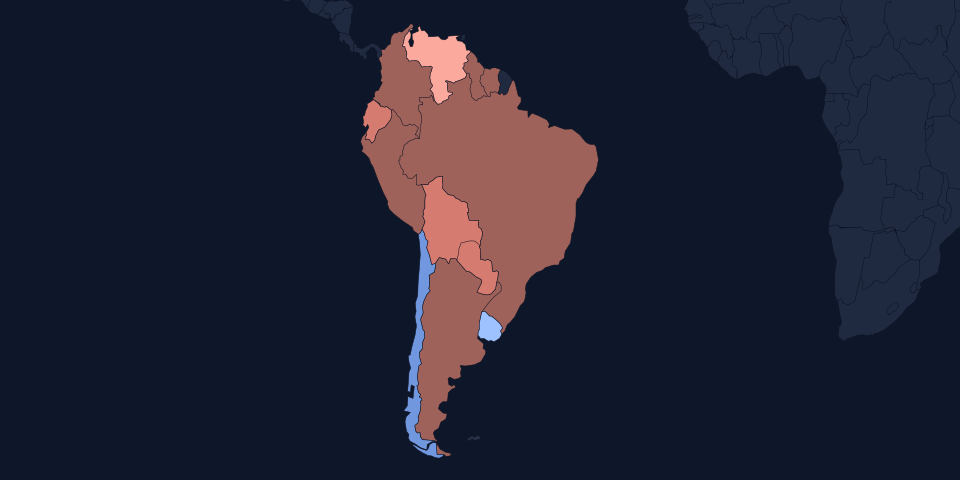
Countries in South America by control of corruption
How well public power is kept from being used for private gain, petty or grand, as the World Bank’s Worldwide Governance Indicators estimate it from surveys and experts: about −2.5 (most corrupt) to +2.5 (least). 12 countries in South America, highest first. World Bank, 2024
Median country
−0.40
half above, half below| # | Country | Estimate | Region |
|---|---|---|---|
| 1 |  Uruguay Uruguay | +1.53 | South America |
| 2 |  Chile Chile | +1.11 | South America |
| 3 |  Colombia Colombia | −0.29 | South America |
| 4 |  Argentina Argentina | −0.33 | South America |
| 5 |  Guyana Guyana | −0.35 | South America |
| 6 |  Suriname Suriname | −0.38 | South America |
| 7 |  Brazil Brazil | −0.41 | South America |
| 8 |  Peru Peru | −0.72 | South America |
| 9 |  Ecuador Ecuador | −0.78 | South America |
| 10 |  Bolivia Bolivia | −1.00 | South America |
| 11 |  Paraguay Paraguay | −1.02 | South America |
| 12 |  Venezuela Venezuela | −1.59 | South America |
Questions
- Which country in South America has the best control of corruption?
- Uruguay has the best control of corruption in South America: an estimate of +1.53 (2024). Next come Chile (an estimate of +1.11) and Colombia (an estimate of −0.29).
- Which country in South America has the worst control of corruption?
- Venezuela, with an estimate of −1.59 (2024).
- What is the typical control of corruption of a country in South America?
- The median of the 12 countries in South America is an estimate of −0.40: half are above it, half below. The median, not the average, because a few countries at the top would drag an average far above almost everyone.
- Where do the figures come from?
- How well public power is kept from being used for private gain, petty or grand, as the World Bank’s Worldwide Governance Indicators estimate it from surveys and experts: about −2.5 (most corrupt) to +2.5 (least). Source: World Bank, 2024. Only independent states are ranked; territories are listed separately. A country’s continent follows Natural Earth; the handful of island states it files under the open ocean are placed by their UN subregion.
Source: World Bank (CC BY 4.0). Figures more than 5 years older than the newest are left out rather than shown beside current ones. Countries sharing a value share a rank. All sources.